

Blog
The Ultimate Guide: 7 Essential Factors to Consider When Buying Headphones for Your Child
In the digital age, headphones have become a staple accessory for children, much like a backpack or a lunchbox. They are used for online learning, entertaining cartoons, immersive gaming, and relaxing with music. However, not all headphones are created equal, especially when it comes to our kids. The wrong pair can be uncomfortable, break easily, or even pose a risk to their delicate hearing. As a parent, navigating the vast market of children’s audio products can be daunting. How do you ensure you’re making the best choice for your child’s safety, comfort, and enjoyment?
The answer lies in focusing on a few critical aspects that separate a mediocre product from a perfect one. By understanding what makes a headphone truly suitable for a child, you can invest in a product that will last, protect, and delight. This comprehensive guide breaks down the seven most important factors you must consider, using insights from expertly designed products like the Gorsun kids’ headphones, to ensure your next purchase is a sound investment in your child’s digital well-being.
1. Prioritize a Secure and Comfortable Fit
The first and most immediate factor your child will notice is how the headphones feel on their head. A poor fit can lead to discomfort, frustration, and a refusal to wear them.
Why Fit and Comfort are Non-Negotiable:
-
Growing Bodies: Children’s heads and ears come in all shapes and sizes, and they grow rapidly. A rigid, one-size-fits-all approach simply doesn’t work.
-
Extended Wear: Whether for a long car journey, a remote school day, or a movie marathon, headphones need to remain comfortable for hours.
-
Avoiding Pressure Points: Ill-fitting headphones can press tightly on the ears or the top of the head, causing pain and headaches.
Key Features to Look For:
-
Adjustable Headband: This is the single most important feature for ensuring a good fit. A fully adjustable headband allows the headphones to grow with your child, providing a secure but not overly tight fit for a 5-year-old and a 12-year-old alike. It ensures the earcups sit perfectly over the ears without straining the head.
-
Lightweight Construction: Heavy headphones are a burden on a child’s small head and neck. The ideal pair should be lightweight enough for them to forget they’re even wearing them. This makes them easy to carry and wear without any strain.
-
Soft, Cushioned Earpads: The material that touches your child’s skin must be soft and breathable. Look for snug, cushioned earpads that create a gentle seal around the ears without feeling hot or sticky. This padding is crucial for comfort and for passively blocking outside noise.
-
Ergonomic Design: A good children’s headphone will have no sharp corners or hard edges. Every part that comes near the child should be smooth and rounded, preventing any accidental pokes or scratches during enthusiastic use.
A product that exemplifies this, like the Gorsun kids’ headphones, combines an adjustable headband with soft, comfortable earpads and an overall lightweight design. This trifecta ensures that the headphones can be worn for extended periods without causing discomfort, making them perfect for focused learning or quiet entertainment.
2. Ensure Hearing Safety with Volume Limitation
This is arguably the most critical factor from a health perspective. Children’s ears are more sensitive than adults’, and exposure to loud noises can lead to permanent, irreversible hearing damage.
The Dangers of Unlimited Volume:
-
Noise-Induced Hearing Loss (NIHL): Loud sounds can damage the delicate hair cells in the inner ear. Unlike other cells, these do not regenerate.
-
Lack of Awareness: Children often lack the judgment to know when a volume is too loud. They may crank it up to drown out background noise, unknowingly putting their hearing at risk.
-
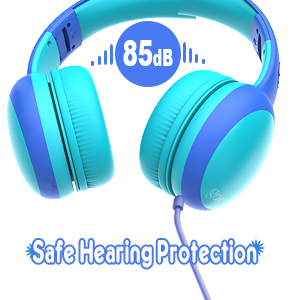
The “Safe Level”: Experts, including the World Health Organization (WHO), recommend that listening levels for children should not exceed 85 decibels (dB).
How to Choose Safe Headphones:
-
Built-in Volume Limiter: Always opt for headphones specifically designed for children with a built-in volume limiter. These are engineered to cap the maximum output at a safe level, typically around 85 dB or lower, regardless of how high the volume is turned up on the device.
-
In-Line Volume Control: Some kids’ headphones come with a separate, easy-to-use volume dial on the cable. This gives parents and children direct control without having to fiddle with the connected device.
-
Open-Back Design (Less Common): Some hearing-safe headphones feature a semi-open or open-back design that allows some ambient sound to leak in. This naturally encourages children to listen at lower volumes because they don’t need to overpower environmental sounds.
While the product description for Gorsun highlights “professional toning technique” for quality sound, it is absolutely essential for parents to verify the dB limit before purchasing any headphones. Always look for explicit packaging or product specifications that state “volume limiting” or “safe listening (85 dB).” Do not assume all children’s headphones have this vital feature.
3. Demand Superior Durability and Tough Materials
Let’s be honest: kids are tough on their belongings. Headphones will be dropped, yanked, twisted, and stuffed into bags. Durability isn’t just a nice-to-have feature; it’s a requirement for any product destined for a child’s hands.
Common Points of Failure in Headphones:
-
The Headband: This is the most likely component to snap under stress.
-
The Cables: Cables are prone to tangling, and the connection points at the plug and the earcups are vulnerable to fraying and breaking from repeated bending.
-
The Earcup Housings: The plastic shells can crack if the headphones are dropped or sat on.
Features That Withstand “Kid-Testing”:
-
Flexible and Reinforced Headband: The best kids’ headphones don’t just adjust; they are designed to be twistable, bendable, and stretchable. A headband that can withstand significant flexing without breaking is a sign of a product built to last.
-
Tangle-Free, Reinforced Cords: A tangle-free cord is a game-changer for both parents and children. It saves time and reduces the stress of untangling knots that can weaken the internal wires. Furthermore, look for reinforced joints where the cable meets the plug and the earcups.
-
Robust Material Choice: The overall build material should be a high-quality, resilient plastic. Some manufacturers, like Gorsun, go a step further by using food-grade materials. This indicates a higher standard of safety and quality, ensuring the product is free from harmful chemicals like BPA and is generally more durable and easier to clean.
A 1.2M cord length, as found on the Gorsun model, is a thoughtful durability and usability feature. It provides ample room to play without being so long that it becomes a tripping hazard or gets caught on everything. The inclusion of a 3.5mm gold plug is another durability plus, as gold is highly corrosion-resistant, ensuring a clear audio signal for longer.
4. Look for Tangle-Free Cords and Easy Storage
The struggle with tangled headphone cords is universal. For a child, a tangled mess can be frustrating and difficult to manage independently. It can also lead to damaged cables and a shortened product lifespan.
The Benefits of a Tangle-Free Design:
-
Promotes Independence: A child can easily manage their own headphones without needing to ask a parent for help untangling them every time.
-
Saves Time and Frustration: It makes the process of getting ready for use quick and effortless.
-
Extends Product Life: Constant pulling and wrestling to untangle knots put immense strain on the delicate internal wires, leading to internal breaks and audio failure.
What Makes a Cord Tangle-Free?
Tangle-free technology typically involves the specific way the internal wires are wrapped and the type of rubber or silicone used for the outer jacket. These materials have a certain “memory” that allows the cable to return to a relatively straight position after being coiled, rather than knotting up on itself. When a product explicitly advertises a tangle-free cord, it is a significant quality-of-life feature that should be high on your priority list.
5. Verify Universal Device Compatibility
Your child will likely want to use their headphones with a variety of devices—a tablet for games, a laptop for school, a family DVD player during road trips, or a smartphone for music. Ensuring compatibility across all these platforms is crucial.
The Gold Standard of Connectivity: The 3.5mm Jack
The 3.5mm headphone jack remains the most universal and reliable audio connection. It is analog, requires no pairing, and is virtually foolproof for a child to use.
Devices that Typically Feature a 3.5mm Jack:
-
Most smartphones (though increasingly rare on flagship models)
-
Almost all desktop and laptop computers
-
Tablets (like most iPads and Android tablets)
-
DVD and Blu-ray players
-
Nintendo Switch (in handheld mode)
-
In-flight entertainment systems
-
Most classroom audio equipment
What If My Device Doesn’t Have a Jack?
If you plan to use the headphones with a device that lacks a 3.5mm port (like a newer iPhone or iPad), you will need a simple and inexpensive adapter (a Lightning-to-3.5mm or USB-C-to-3.5mm dongle). This is often a more reliable and cost-effective solution for children than opting for Bluetooth headphones, which require charging, pairing, and are more prone to being lost.
The Gorsun kids’ headphones, with their standard 3.5mm headphone jack, are guaranteed to work with all smartphones, computers, DVD players, tablets, and more, making them a versatile and dependable choice for any situation.
6. Seek a Clear, Quality Sound Experience
While safety and durability are paramount, the audio experience itself cannot be ignored. The purpose of headphones is to deliver sound, and poor quality audio can be muffled, tinny, or distorted, which is unpleasant and can hinder learning or enjoyment.
Why Sound Quality Matters for Kids:
-
Educational Content: For online learning, language apps, or educational videos, clear speech and audio are essential for comprehension.
-
Music Appreciation: High-quality sound allows children to experience the richness and detail of music, fostering a deeper appreciation.
-
Immersive Entertainment: Whether watching a film or playing a game, good sound draws them into the story and enhances the experience.
Elements of Good Sound in Kids’ Headphones:
-
Balanced Tuning: Headphones should not be overly bass-heavy or shrill. A balanced “toning technique,” as mentioned in the Gorsun description, ensures that voices are clear, music sounds natural, and sound effects are crisp without being harsh.
-
Stereo Sound: High-quality stereo effect means the sound is separated into left and right channels. This creates a sense of space and directionality, which is crucial for an immersive experience in games and movies. It also helps in developing auditory processing skills.
-
Distortion-Free at Safe Volumes: The drivers (the small speakers inside the earcups) should be capable of producing clear audio even at the limited, safe volume levels.
Features like a marked spot on the headband for easy Left/Right recognition might seem small, but they contribute directly to the correct audio experience. When children wear the headphones correctly, they hear the stereo sound as the content creator intended.
7. Choose an Age-Appropriate and Engaging Design
Finally, the headphones need to appeal to the child themselves. A product that a child is excited about is one they are more likely to take care of. Furthermore, the design should be appropriate for their age and developmental stage.
Design Considerations for Different Ages:
-
Toddlers and Preschoolers (Ages 3-5): Look for smaller, more compact designs with bright colors, fun patterns, or characters from their favorite shows. The durability factor is paramount here.
-
School-Age Children (Ages 6-12): This group may start to develop their own tastes. Designs can be more varied, from sleek and “cool” to themed with their interests (sports, music, science, etc.). The adjustable headband becomes critical here as they grow.
-
Teenagers (Ages 13+): While still needing volume limitation, teens often prefer a design that looks more like adult headphones but in vibrant colors. They may also appreciate features like a built-in microphone for gaming or video calls.
Engaging and Practical Design Elements:
-
Fun Aesthetics: Color options that children love can make the headphones feel like a personal belonging rather than just another accessory.
-
Easy Identification: The marked spot on the headband for L/R recognition is a brilliant, child-friendly feature. It empowers even young children to put on their headphones correctly by themselves, fostering independence.
-
Overall Appeal: A well-designed headphone, like the Gorsun, considers the entire user experience. It’s not just a tool; it’s a terrific present that a child will be genuinely happy to receive and use for listening to music, playing games, or watching TV and films.
Conclusion: Making an Informed Choice
Purchasing headphones for your child is a decision that blends practicality with care. By focusing on these seven key areas—Fit & Comfort, Hearing Safety, Durability, Tangle-Free Design, Compatibility, Sound Quality, and Age-Appropriate Design—you can move beyond the marketing hype and select a product that truly meets your child’s needs.
A product that checks all these boxes, such as the Gorsun kids’ headphones highlighted throughout this guide, represents a thoughtful synthesis of these principles. It offers a lightweight and adjustable fit, is built from food-grade material with a tangle-free cord to withstand daily use, provides a safe and high-quality stereo experience, and connects universally via a 3.5mm jack. By making an informed choice, you are not just buying a pair of headphones; you are investing in your child’s comfort, safety, and enjoyment in their digital world.
Shop Now! 👉Cat Ear Kids Headphones – Volume Limited & Safe, 3.5mm jack
Follow Gorsun INS: https://www.instagram.com/gorsunglobal/
Follow Gorsun WhatsApp Cannot: https://whatsapp.com/channel/0029Vb6N7Ka59PwOZpenNc3U
Follow Gorsun Youtube Cannot: https://www.youtube.com/@GorsunOfficial