


We are here to help
Mon - Fri, 9:30 - 18:30
Free shipping > €50 Always free returns Quick & personal support
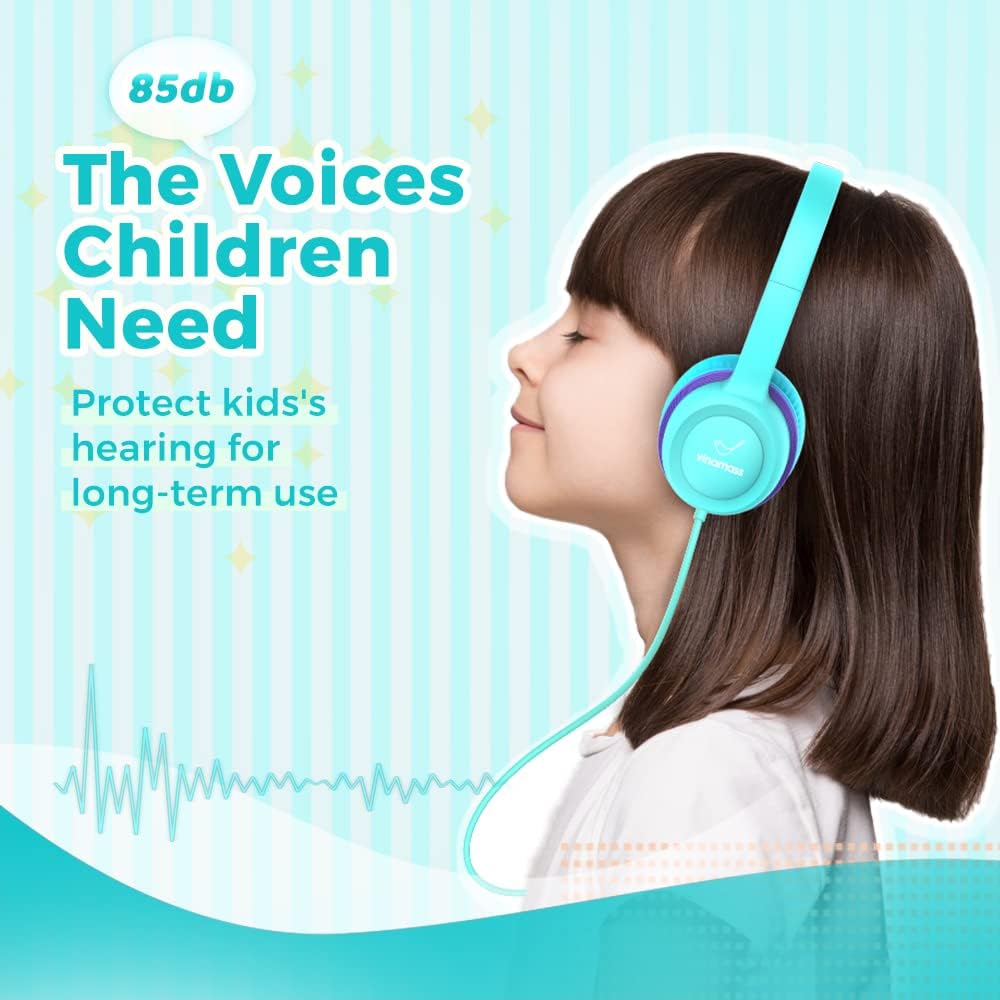
In today’s digital world, children are using headphones more than ever for learning and entertainment. However, this exposes them to a silent threat: noise-induced hearing loss (NIHL). The World Health Organization (WHO) warns that over 1 billion young people globally are at risk of hearing damage due to unsafe listening practices[citation:3]. For parents, the question isn’t just about sound quality—it’s about safety. This guide explores the critical importance of volume-limited headphones, explains the 85dB safety standard recommended by the WHO, and highlights the features that make them an essential tool for protecting your child’s auditory future.
Children’s ears are more sensitive and vulnerable than adults’. Their ear canals are smaller, which means sound pressure is more intense on their delicate eardrums. Unfortunately, hearing damage from loud noise is often permanent and irreversible[citation:3]. Once the sensitive hair cells in the inner ear are damaged, they do not regenerate[citation:1].
The statistics are alarming. Globally, an estimated 34 million children have some form of hearing loss, and a significant portion of these cases are preventable[citation:1]. Many instances stem from exposure to high volumes through personal audio devices[citation:10]. The risk isn’t limited to extreme volume; prolonged exposure to moderately high levels can be just as harmful over time.
| Risk Factor / Statistic | Detail | Source/Reference |
|---|---|---|
| Children at risk globally | Over 1 billion young people at risk from unsafe listening | World Health Organization (WHO)[citation:3] |
| Preventable cases | Up to 60% of childhood hearing loss is preventable | WHO and health authorities[citation:1][citation:10] |
| Common cause | Unsafe use of personal audio devices and exposure at loud venues | WHO Make Listening Safe initiative[citation:3][citation:9] |
The decibel (dB) is the unit used to measure sound intensity. The 85-decibel (85dB) level is internationally recognized by health experts and standards organizations as the maximum safe exposure limit for extended listening[citation:8].
To put it in context, 85dB is roughly the volume of city traffic heard from inside a car or a busy restaurant. It is loud enough for clear audio enjoyment but below the threshold where damage typically begins with prolonged exposure. Experts recommend that for sounds at 85dB, listening time should be limited to a maximum of 8 hours. As volume increases, safe listening time plummets. At 100dB—a level common in some headphones at maximum volume—damage can occur in as little as 15 minutes[citation:3].
Children, especially younger ones, lack the awareness and self-control to keep volumes at a safe level. In noisy environments like cars or planes, they often turn the volume up to drown out background noise, unknowingly pushing it into the danger zone. Furthermore, hearing damage is often painless and gradual, so there are no immediate warning signs. This is why external, built-in protection is not just helpful—it’s essential.
While the 85dB volume limiter is the cornerstone of hearing protection, a truly child-centric headphone incorporates several other design and safety features.
This is the most critical feature. Quality volume-limiting headphones use a hardware-based circuit within the headphones themselves to cap the maximum output sound pressure level (SPL). Unlike software apps which can be overridden, this physical limiter is tamper-proof. It ensures that no matter how high the volume is turned up on the connected device, the sound reaching the child’s ears never exceeds the safe threshold, typically set at 85dB or lower.
Children’s headphones must be built for real-world use. Key ergonomic features include:
Safe listening shouldn’t mean poor audio. Good children’s headphones deliver clear, full-range sound suitable for music, educational apps, and movies. They typically connect via a standard 3.5mm audio jack, making them compatible with school Chromebooks, tablets, smartphones, and gaming devices like the Nintendo Switch[citation:8]. This universality makes them a versatile tool for both learning and leisure.
Reputable products comply with rigorous international safety standards for children’s goods. These may include:
Compliance with these standards, as noted in product specifications, provides an extra layer of assurance regarding material safety[citation:8].
| Feature | Volume-Limited Kids’ Headphones | Regular/Adult Headphones |
|---|---|---|
| Maximum Output | Capped at ~85dB (safe level) | Can often exceed 100dB (dangerous level) |
| Primary Safety Focus | Preventing hearing damage | Audio fidelity and features |
| Volume Control | Tamper-proof, built-in limiter | User-controlled, can be set to unsafe levels |
| Design | Child-sized, durable, lightweight | Often sized for adults, can be heavy |
| Material Safety | Typically comply with CPSIA, EN71 toy standards | May not be tested for child-specific safety |
Examining a specific model, like the A63 kids headphones, illustrates how these principles come together in practice:
While volume-limited headphones are a powerful tool, they are most effective as part of a broader strategy for auditory health.
Talk to your child about their hearing. Explain in simple terms that ears can get “tired” and need quiet time. Teach them the “60/60 rule” suggested by many hearing experts: listen at no more than 60% of maximum volume for no longer than 60 minutes at a time before taking a break[citation:6][citation:7].
Children learn by example. Be mindful of your own headphone volume and listening habits.
Even with safe headphones, encourage regular listening breaks to give the ears a rest. Use these breaks for other quiet activities.
Incorporate hearing screenings into your child’s regular health check-ups. Early detection of any issues is key to effective intervention[citation:1][citation:10].
Protecting a child’s hearing is a profound responsibility in our noisy, connected world. Hearing loss is permanent, but it is also largely preventable[citation:3][citation:10]. Choosing headphones with a built-in 85dB volume limiter is one of the simplest and most effective actions a parent can take. It provides peace of mind, knowing that your child can explore the worlds of music, stories, and learning without risking their auditory health. By combining this smart technology with education and healthy listening habits, you empower your child to enjoy the gift of sound safely—for a lifetime.
Shop Now! 👉Safe Volume Kids Headphones – Wired On-Ear for School, 3.5mm Jack
Follow Gorsun INS: https://www.instagram.com/gorsunglobal/
Follow Gorsun WhatsApp Cannot: https://whatsapp.com/channel/0029Vb6N7Ka59PwOZpenNc3U
Follow Gorsun Youtube Cannot: https://www.youtube.com/@GorsunOfficial
No account yet?
Create an Account